
How Bristol Residents Come Into View
A Bristol resident lookup is really source matching. No single master list exists. Address questions start with the assessor or the GIS parcel map, while civic questions belong to the Bristol registrars or the Connecticut Secretary of the State. Family history often fits the Bristol Public Library History Room, a newspaper index, or a cemetery record better than any city directory. Court and estate questions follow their own districts and display limits.
The best result names exactly what it proves. A parcel record can show an owner, a mailing field, an account, or a map-lot identity. It does not list everyone living there. A directory entry dates a name and an address. A court hit is a party or case lead, nothing more. A voter lookup confirms a registration route, though privacy rules may hide the address. Label each result before combining it with another.
- Write down the question, the Bristol date or time period, and the clue you already have.
- Use Vision or Bristol GIS for an address, owner spelling, account, MBL, PID, or parcel crosswalk.
- Use the Town Clerk land-record route for the recorded instrument, grantor, grantee, book, page, or map.
- Use the state voter, court, probate, vital, business, or license system that matches the record type.
- For an older Bristol name, ask the History Room for the directory, newspaper, church, cemetery, probate, or house file.
This order keeps a Bristol residents directory search narrow. A failed lookup stays useful too. The next step is always clear: a custodian, a request form, a library shelf, or an older index.
Bristol's Office Trail for Resident Records
Bristol is a town and a city at once. The two share coextensive boundaries. The local Town Clerk serves as the practical recorder for land instruments, maps, vital records, elections, trade names, and municipal files. The assessor and the GIS system answer different property questions. The registrars keep the town voter roll. For older people and place research, the library and Historical Society are essential custodians, not side notes.
When a request fits no single portal, the city's Guide to City Services is the best routing page. That official page shows why routing changes so often.
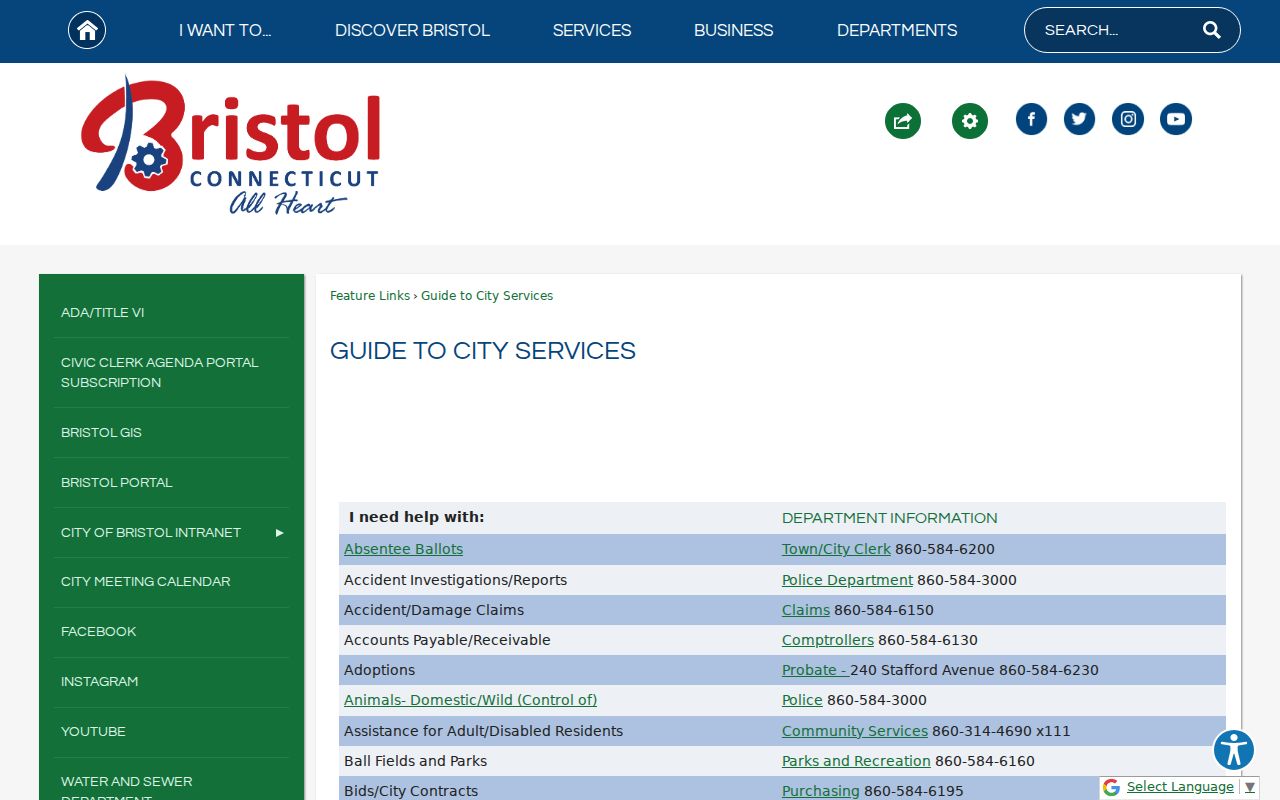
Start with the department that owns the question. Then confirm the current form, fee, and hours with that office directly. A third-party directory is not the custodian. The Bristol Town Clerk office page gives the local address and that office's records responsibilities.
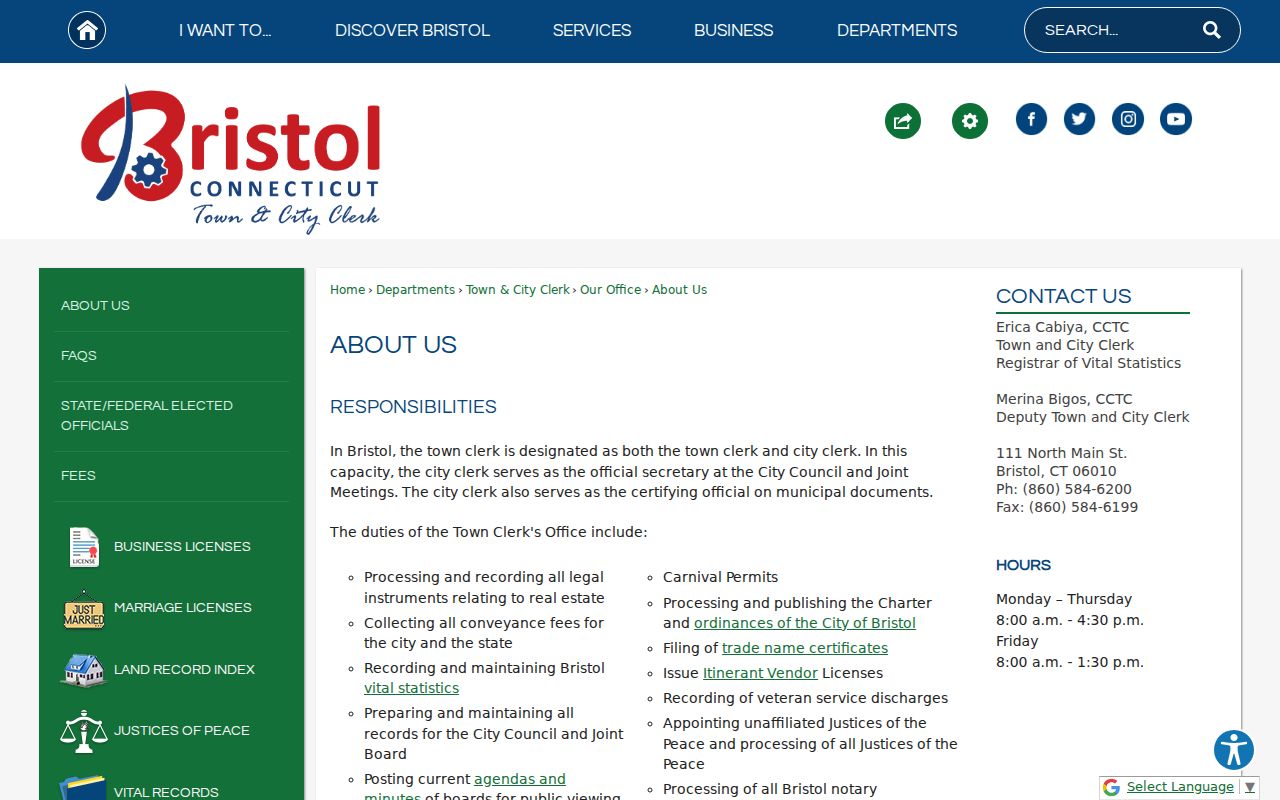
The Town Clerk holds Bristol's land records. Vital records, elections, trade names, and other municipal files come from the same office, and the current Bristol land-record page explains the RecordHub route and copy options.
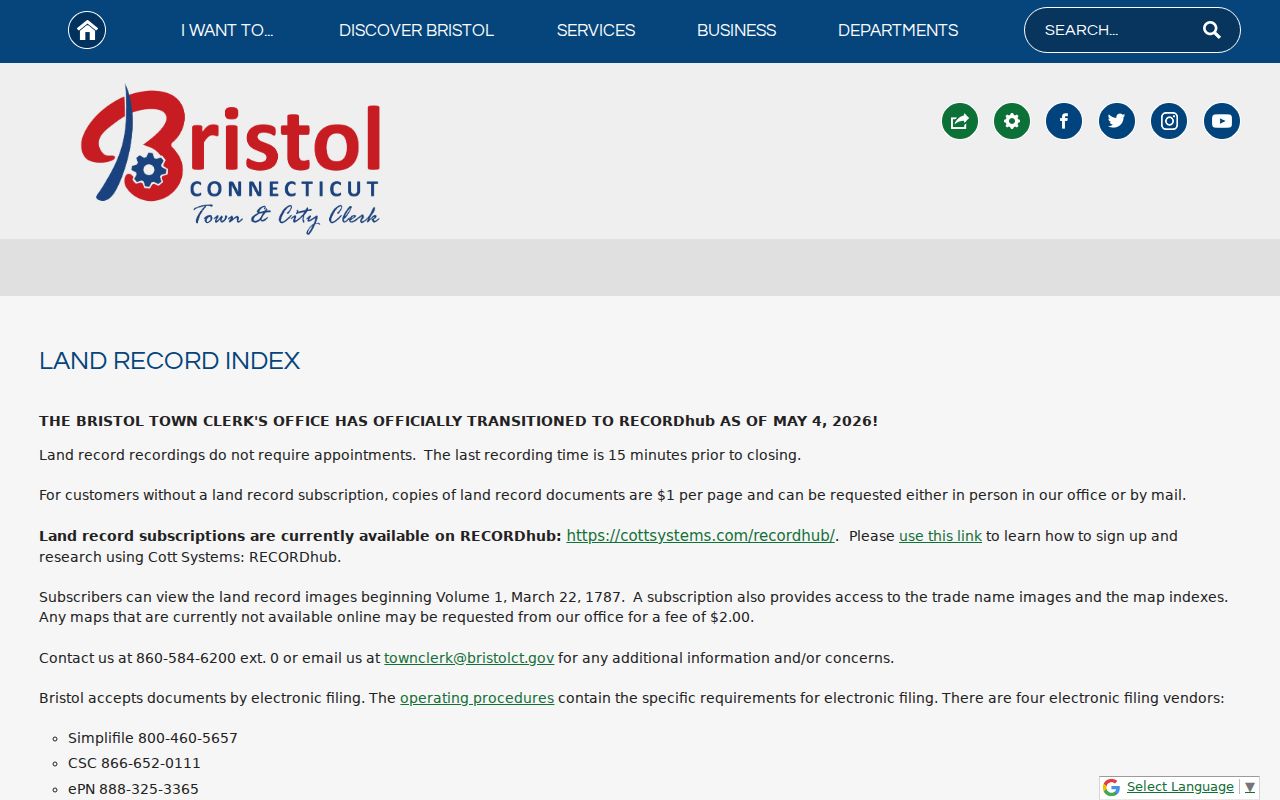
Use that page for the recorded index. Preserve the book, page, map, or image reference the search returns so any later request lands on the right instrument.
Bristol Town Clerk
111 North Main Street
Bristol, CT 06010
860-584-6200
Office and records details
Bristol Assessor and GIS
Municipal property records
Owner, parcel, and map routes
860-584-6240
Assessor portal
Bristol Registrars
Town voter-roll custodian
Registration and election questions
860-584-6165
Registrar information
Bristol Public Library
History Room, 5 High Street
Directories, newspapers, maps, and family history
860-584-7787
Hartford County is a geographic and judicial label. It is no county clerk shortcut for Bristol records. Use the Town Clerk, the New Britain Judicial District, Bristol-Plymouth Probate District PD-19, or the relevant Connecticut agency.
Bristol's Missing County Shortcut
Connecticut has 169 towns. No county recorder or county clerk system handles local deeds, vital records, or voter rolls. Hartford County still appears in court geography and archive descriptions. It never replaces Bristol's own custodians. Bristol was set off from Farmington in 1785. Burlington separated in 1806, and the city and town became coextensive in 1911. Those dates matter whenever an older source uses a town, village, or county label.
A Bristol deed starts with the Town Clerk. An estate goes to Bristol-Plymouth Probate. A civil case belongs to the New Britain Judicial District. It sits within the Connecticut Judicial Branch search. Statewide vital, business, licensing, custody, or election records stay with the state agency. The Connecticut State Library town and county guide explains the government structure behind this routing.
This odd arrangement is useful context, not a trap. A Hartford County reference can point to an archive series or a judicial district without proving any county office holds the underlying Bristol record. So keep the town, record type, and custodian together in your notes.
Six Bristol Parcel Search Modes
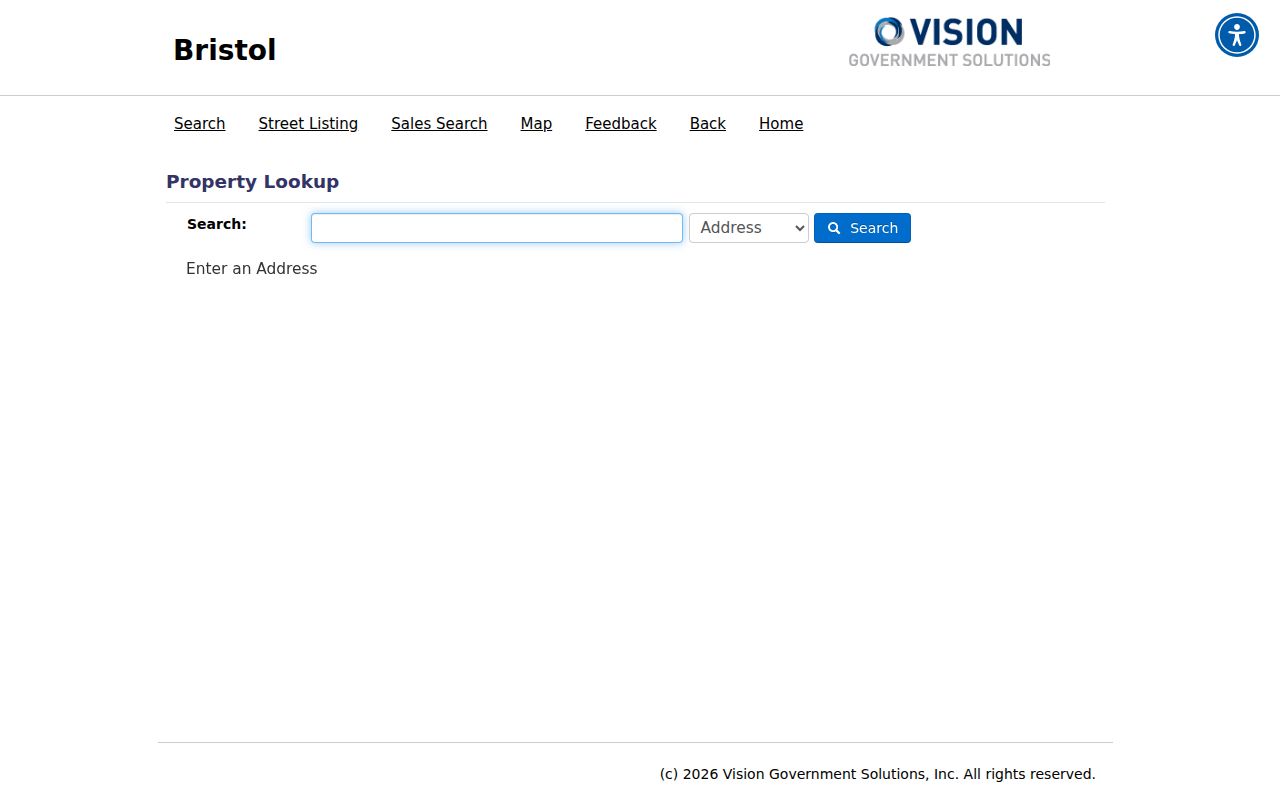
The Vision Government Solutions Bristol property search offers several entry points for a name or address trail. Its selector includes Address, Owner, Acct#, Mblu, PID, and All. Mblu breaks into Map, Map Cut, Block, Block Cut, Lot, Unit, and Unit Cut. Street Listing and Sales Search sit as separate links. No field carries a required marker. Enter one clear criterion and preserve the result date.
The official Vision search screen appears below. Its fields serve a Bristol residents directory search well, but an assessment record is not a certified title record and never lists every occupant.
The Bristol GIS / MapXpress tool doubles as a cross-check. Its search screen accepts Owner or Co-owner, House No, Street, and Account. The street selector spans every street in the city. A parcel result returns MBL, GIS ID, acreage, zoning, land use, coordinates, and mailing fields. The Vision assessment portal feeds the current assessment database behind all six modes.
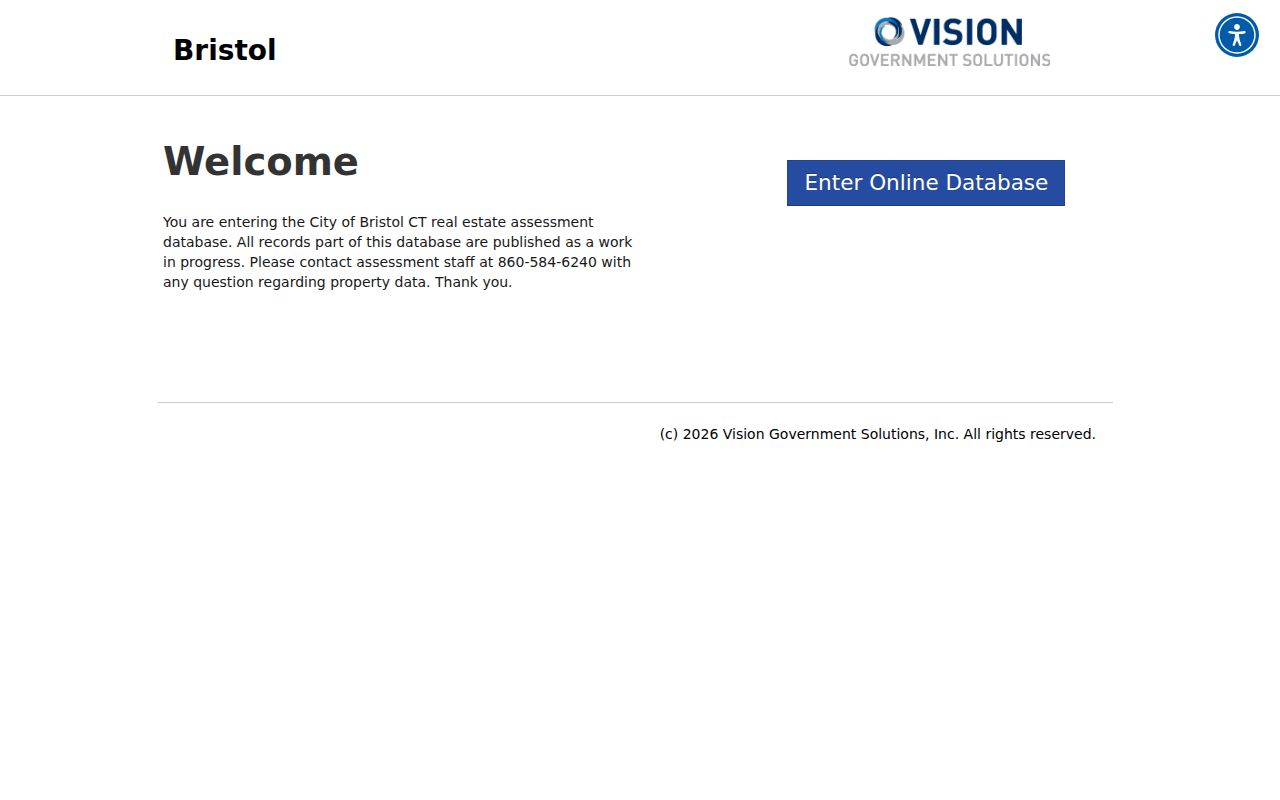
The portal carries a work-in-progress notice. That is worth respecting. Save the date of any search, and ask the Bristol Assessor to settle a field conflict before it matters. The official Bristol Assessors page gives office context for the Vision data.
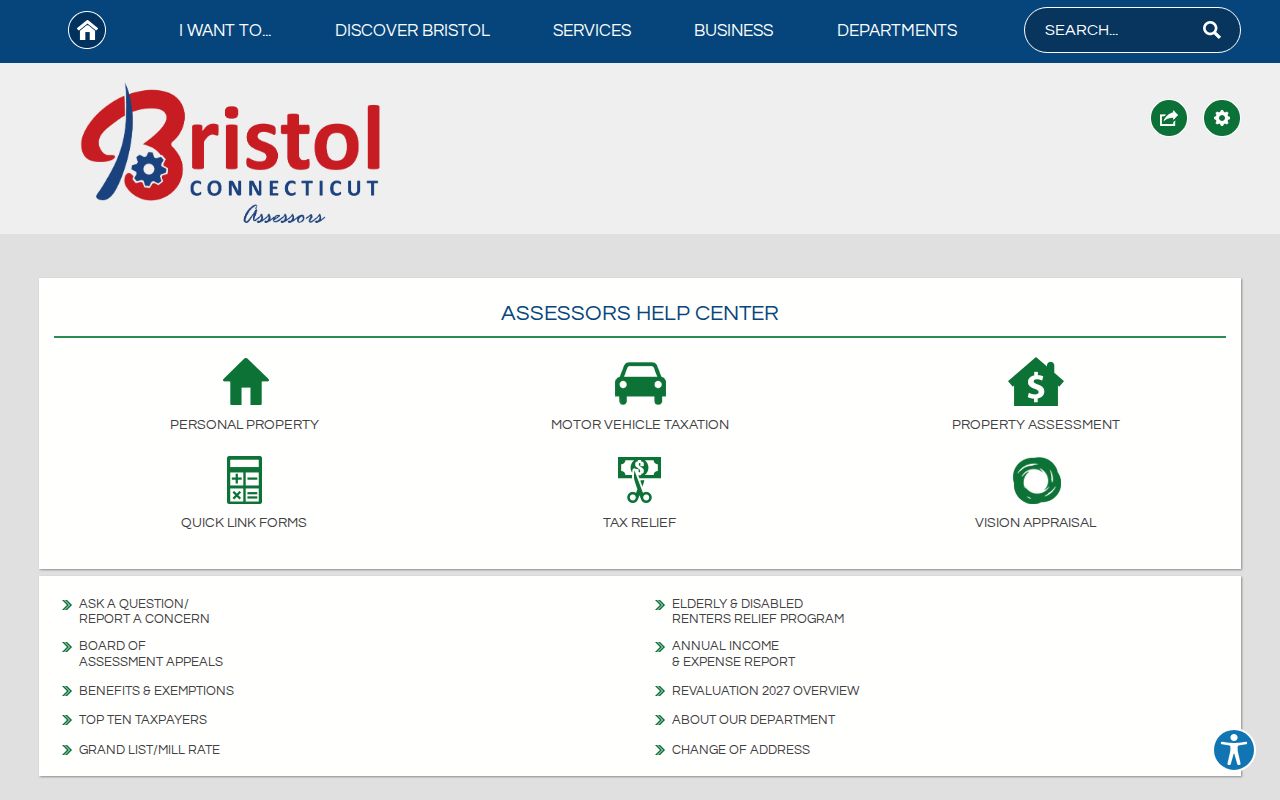
Assessment values and ownership displays make strong leads. They are not proof of title. The recorded instrument held by the Town Clerk remains the check that counts. The public Bristol GIS property search adds parcel and map context to any assessment result.
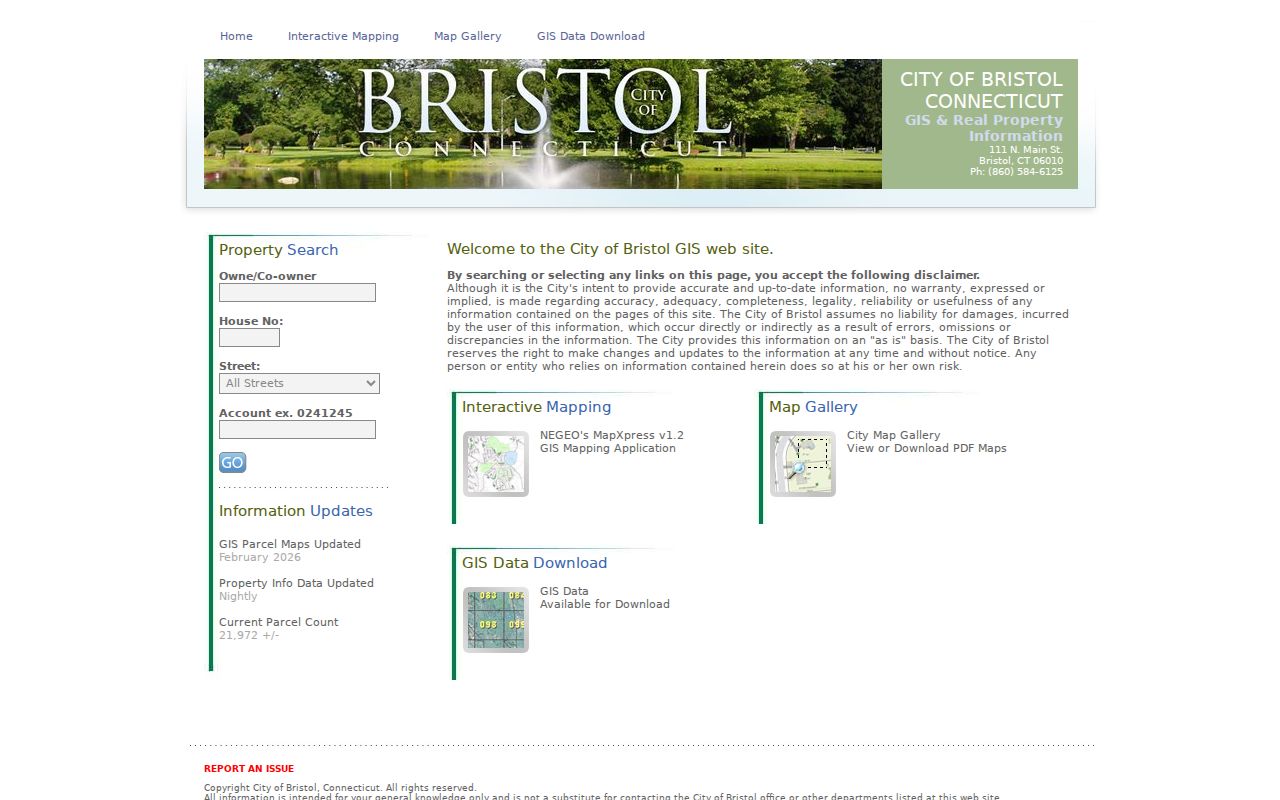
MapXpress reports property information updated nightly and parcel maps updated in February 2026, though individual layer vintages can differ.
| Portal control | What to enter | What it can lead to |
|---|---|---|
| Vision Address | Street address | Assessment card, owner display, sales and Street Listing links |
| Vision Owner | Name string | Parcel candidates, mailing field, account or MBL crosswalk |
| Vision Acct# or PID | Database identifier | One parcel record and related card fields |
| Vision Mblu | Map, block, lot, unit segments | Map-lot search where the parcel identity is known |
| MapXpress House No and Street | Number plus selected street | Parcel polygon, owner, situs, mailing, and map layers |
| MapXpress Account | Account string | GIS parcel record and source/edit information |
When Bristol Address Fields Disagree
A Bristol property result can carry several address roles at once. Each means something different. Situs is where the parcel sits. Mailing is where the owner, institution, or agent gets mail. A deed may lean on a legal description or recorded map. It can do so instead of using either printed string. The owner field might name a city, a trust, a business, a fiduciary, or a person. That field could also name a person. None of these are interchangeable. The public MapXpress property search offers a clean civic example. Parcel 120 Memorial Boulevard carries a situs at that address. It also holds MBL 30-114, account 0243060, and GIS ID 2759. Its mailing field points to 111 North Main Street, Bristol. That is the City Hall address. The record even holds a comment on a combined abandoned portion of Willis Street. Read this way, the parcel shows how Bristol records preserve history. It does this without turning a mailing address into a household. The Bristol street directory page traces this address chain further. For a first pass, save each value beside its field label and date. Then take any title question to the Town Clerk's recorded index.
- Parcel
- A mapped property unit with a database or tax identity, such as an MBL or account.
- Situs address
- The physical location assigned to the parcel, not necessarily the address used for mail.
- Mailing address
- The destination shown for notices or ownership correspondence, which may be an office or PO Box.
- Index
- A searchable list that points to a record; it is not always the scanned or certified document.
- Criss-cross directory
- A historical street-and-number section that can turn an address into a listed name.
Bristol Residents Directory Sources Today
Bristol splits its people and place records by purpose. No single source lists every resident. Some systems show a public role rather than an actual residence. The table below keeps those distinctions visible while pointing to the official route for each.
| Source | What it can show | Keeper | Access boundary |
|---|---|---|---|
| Vision assessment | Owner display, parcel, mailing, value, sale and card fields | Bristol Assessor | Public search; not certified title or full occupancy |
| MapXpress GIS | Parcel, account, MBL, situs, mailing, layers, source fields | Bristol GIS | Public map and property search; data changes over time |
| Voter lookup | Registration and participation information within current rules | Bristol registrars and SOTS | Privacy, purpose, and protected-address limits apply |
| RecordHub index | Grantor, grantee, instrument, date, book/page and image lead | Bristol Town Clerk | Index and image access vary by account and record |
| Business and eLicense search | Entity roles or public credential status | Connecticut state agencies | Role or license result, not a resident roster |
The best Bristol residents directory answer depends on the question being asked. A parcel search can anchor a street. A voter result can support civic routing. A recorded deed can establish an instrument. A business or license result can show a public role. A historical directory can place a name in an earlier year. Labeling the source keeps a useful lead from hardening into an unsupported claim.
Connecticut Voter Records Need a Privacy Check
The Connecticut voter lookup runs inside a statewide system. Bristol's registrars stay the local custodians. Statewide guidance says registration and participation data are refreshed within 60 days after an election or primary. Current rules limit public birth-date display to the birth year alone. Exact output labels and town-selector behavior are best confirmed on the live page. A bulk voter-file request works differently from a name lookup. The official form asks for requester and mailing details. It charges $300 for a CSV. Approved purposes are election-related, scholarly, journalistic, political, or governmental. The form bars personal, commercial, harassment, advertising, marketing, and reproduction uses. That route is not a general Bristol people list.
When a voter question matters, call the Bristol registrars. Use only the fields the official system exposes. A non-match proves nothing about a home address, political preference, or current activity.
Bristol Courts Split Name and Estate Trails
Bristol's ordinary civil matters belong to the New Britain Judicial District. It is not a Hartford County clerk's turf. The Connecticut civil inquiry screen asks for a required last name plus optional first name, location, category, case type, and sort order. It also offers a name-search choice such as Starts With, Contains, Is Equal To, or Sounds Like. Bristol criminal and motor-vehicle leads take a separate docket route. There, Bristol Geographical Area 17 appears as a location choice. A court search result is a lead, not the file. Public civil, family, and small-claims display generally covers a limited period after disposition. Some matters, protected cases, and removals follow shorter rules. A listed party might live elsewhere. A party might appear for an organization or sit inside a procedural entry. When a legal fact must be verified, rely on the clerk's file or a certified copy. The Bristol-Plymouth Probate lookup brings its own fields: case type, PD-19 district, Both, Open, or Closed status, and first and last name. Result columns cover case number, name, type, and district. Principal decedent-estate and trust data run from January 5, 2011 to the present. Coverage before that is spottier. The official Connecticut Judicial Branch civil inquiry is the entry point. It keeps court records in their own lane.
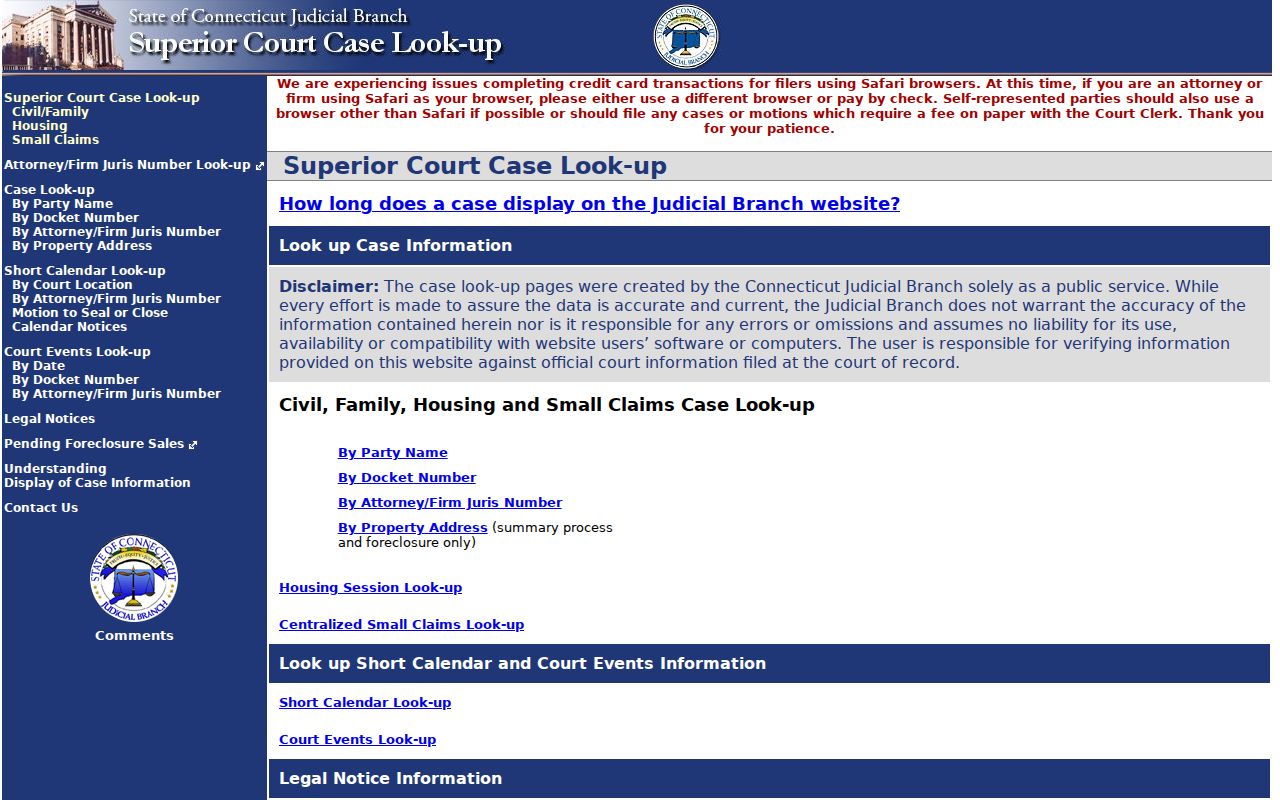
An older Bristol estate may simply sit outside the online display. For a file that does not appear, contact the probate court or clerk rather than reading a blank result as blank history.
Bristol Vital Records Follow Event and Eligibility
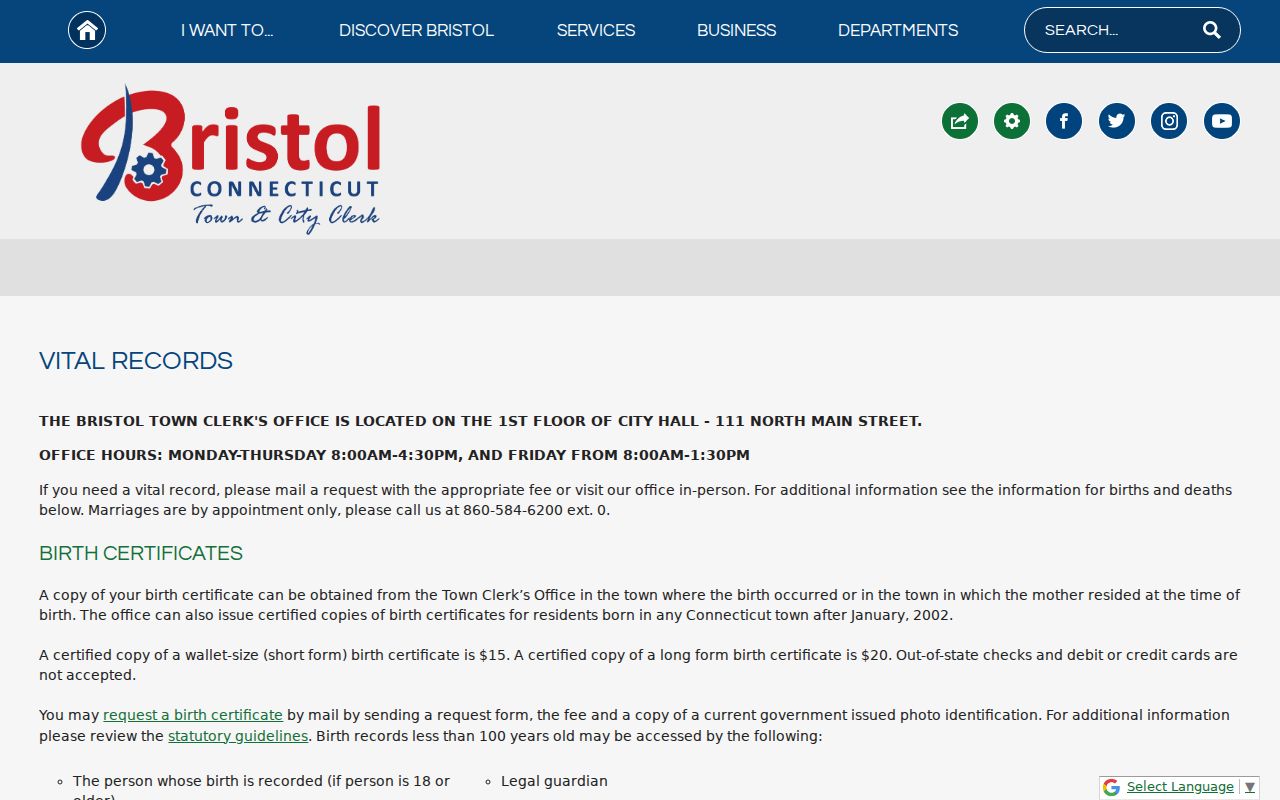
Birth, death, and marriage records for Bristol live at City Hall. The Bristol Vital Records office handles both walk-in and mail requests. Fees run $15 for a short birth certificate. A long form costs $20, and each death or marriage copy also costs $20. A mail request needs the correct application, the fee, and a current government photo ID. For events anywhere in Connecticut, the state Department of Public Health publishes its own forms and statewide instructions.
Eligibility turns on the event and the date. Under Chapter 93, birth records less than 100 years old go only to requesters who qualify. Once a birth record reaches 100 years, it opens up through the statutory route. The state office holds statewide births, deaths, marriages, and fetal deaths from July 1, 1897 forward. Earlier events usually belong to the town where they happened. A birth route can also hinge on Connecticut residence and the year of the event.
Note: The official Bristol vital-record page links to the application and eligibility rules rather than displaying restricted certificates.
Family history works best when a certificate is paired with something else. A Bristol Press index, a cemetery or church record, a probate file, or a land record can each confirm what a single document hints at. When a record can be described without exposing living people, describe it that way.
Bristol Business and License Records Show Roles
Two state systems cover people tied to Bristol businesses. The Connecticut Business Records Search takes a business name, an ALEI, or a filing number. Its results can show the legal name, ID, principals, agent, formation date, entity type, and address. The eLicense lookup works from the other side. It offers fields for credential type, prefix, number, status, business or DBA name, first and last name, and address filters.
Each system answers a role question. It may tie a person to an entity, a trade name, an agent record, or a current credential. Neither proves residency at the listed address. A missing historical credential does not mean none ever existed. So record the lookup date and the exact entity or credential type alongside the result.
Local searches add two more routes. The Bristol Town Clerk keeps trade-name filings. A UCC information request can surface secured-party records when relevant. State guidance lists plain and certified copy routes. But confirm current fees and delivery options before sending payment. Treat a name-only match as a lead until the entity identifier or filing record agrees.
Bristol Names Need a Confidence Label
A Bristol residents directory answer deserves a confidence label. The sources do not all ask the same question. A current official field backed by a second official identifier is strong. A dated library directory or newspaper index makes a solid historical lead. A name-only hit in a court, voter, business, or parcel record needs more context. Copied third-party listings never replace the custodian.
Where possible, anchor the name with a second identifier. That could be name plus MBL, or name plus account. It could be name plus street and year, or probate name plus district and case number. Save the source URL, the search date, and the exact field returned. Note the reason the search stopped too. That small audit trail keeps a Bristol search honest. It does so without assembling unrelated details about a living person.
| Source kind | Useful proof | What it does not prove |
|---|---|---|
| Assessor or GIS | Parcel, owner display, mailing or situs field | Every occupant or certified title |
| Voter lookup | Registration route or status when public | Political preference, exact address, or absence from town |
| Court or probate | Party, case, estate, or district lead | Wrongdoing, current residence, or a complete case history |
| Library or newspaper | Dated name, address, event, or family clue | Continuous residence or current presence |
| Commercial result category | At most, a lead to verify elsewhere | Official accuracy, completeness, or permission to republish |
Bristol's Historical Resident Directories
The Bristol Public Library History Room keeps Bristol city directories from 1884 through 1991. The volumes cover Bristol, Terryville, and Plainville sections. Not every year survives. Publisher details have to be checked volume by volume. A dated directory entry can pin a name to an address. A volume with a street or number cross-reference lets you work backward from a place to its occupants.
The same room holds far more than directories. Bristol Press microfilm runs from 1871 through 2006 and again from 2012 to the present. Bristol Observer material spans December 2004 forward with gaps. Shelves also carry church and cemetery records. They include probate records from 1785 to 1830, assessor records from 1815 to 1917, maps, Sanborn sheets, oral histories, photographs, postcards, and yearbooks. The full shelf list appears on the Bristol city directory collections page. So does the reading method.
An old street directory is a dated source. It is never a claim about who lives somewhere now. Read each entry closely. Check spelling, initials, village labels, street number, occupation, and the neighboring names. Forestville labels can sit beside a Bristol address. An old route may not match a current street string.
Bristol History Room Bridges Names and Places
The History Room earns its keep by tying names to places. A directory entry points to a street. A Bristol Press index adds the event. Sanborn and topographic sheets explain the building itself. A house file may hold a clipping or photo. Cemetery, church, and probate sources round out the family story. Keep a date and citation with each item.
The library's genealogy pages list Hale cemetery indexes and Revolutionary soldiers buried in the North and South Cemeteries. Baptist, Congregational, and Trinity Episcopal church records appear too. So does the Tracy Peck Record of Deaths for Bristol from 1793 to 1861. Probate records run from 1785 to 1830. Assessor records span 1815 to 1917. These are historical paths rather than a current all-residents file.
The Bristol Historical Society at 98 Summer Street adds family trees, yearbooks, and photographs. Bristol Press material, exhibits, and research help are available there. Its public pages show no full item catalog, so write ahead before a visit. Any Bristol residents directory search should end at the named archive. That office can confirm the lead.
Keep a Bristol Records Search Current
Local portals change often. The Town Clerk's land-record page reports a move to Cott RecordHub on May 4, 2026, with subscriber images stated from Volume 1 on March 22, 1787. Bristol GIS says parcel maps were updated in February 2026, property information refreshes nightly, and the county covers about 21,972 parcels. Those dates describe each source's own currency. They do not promise that every layer or historical image shares it.
The city's permit page requires an account before online application and search, and it lists a public computer option, though the page does not spell out every live portal field. Connecticut's 2026 voter privacy change alters how public birth dates are treated. The State Archives also posts an off-site collection notice during compact-shelving work. Recheck fees, hours, forms, ZIP service, and live fields before sending any request.
A current Bristol residents directory works best when it shows its source date and its limits. Start with the official office. Preserve the result, verify the part that matters, and stop once the answer is complete.